Research Article
Aim & Scope
JIET aims to bring together national and international researchers and scientists and share new and important results in the fields of engineering technologies such as imagination, research, planning, creation, testing, improvement, application, use and inquiry.
Our journal, which has accepted publications under the hosting of DergiPark since 2018, continues its publication life by being taken over by Karadeniz Technical University as of June 2021. Our journal accepts original research and review articles in the fields of Civil Engineering, Computer - Software Engineering, Electrical - Electronics Engineering, Communication Engineering, Energy Systems Engineering, Mechanical Engineering and Applied Physics.
Author Guidelines
Our journal, which is published within the body of Karadeniz Technical University, includes original studies in the fields of Civil Engineering, Computer-Software Engineering, Electrical-Electronics Engineering, Communication Engineering, Energy Systems Engineering, Mechanical Engineering and Applied Physics. The writing rules of the articles to be published in the journal are given below and in the journal template. All articles are evaluated by expert referees in terms of their scientific contribution and scope. Authors are responsible for the accuracy of their data. The journal reserves the right to make appropriate corrections in language and spelling where it deems necessary. Manuscripts can be sent back to the corresponding author for revision when deemed necessary. The copyright of the articles published in the journal is taken in the name of "Black Sea Technical University Journal of Investigations on Engineering and Technology". Manuscripts previously published in any language are not considered for publication in the journal. No fee is charged from the authors for the evaluation and publication process in the journal. Authors cannot send a work they have submitted to Karadeniz Technical University Journal of Investigations on Engineering and Technology and is in the process, to another journal. Authors must upload the “Copyright Transfer Form”, “Conflict of Interest Notification Form” and “Author Contribution Notification Form” together with the article on the online system (DergiPark system) in the first registration.
Articles to be submitted to Karadeniz Technical University Journal of Investigations on Engineering and Technology can be prepared using the "Article Template" in MS-Word® format. The submitted articles will be reviewed and evaluated by the relevant field editors, and the publisher will be informed about the status of the article in the process.
Keywords
In this section, write at least 3 and at most 6 keywords that reflect the content of the article, one below the other, as in the example.
1. Spelling Rules
The entire article should be written in a single column with 10 font size, "Cambria" font. Line spacing should be “single” and a “single line” space should be left before and after paragraphs. There should be 6 pt space between the titles and the text. Titles can be written as 1. Introduction, 2. Materials and Methods, 3. Results, 4. Discussion and Conclusion. Subtitles can be added if necessary.
Titles should be written in bold letters, the first letters of all words except conjunctions should be capitalized. Conjunctions should be written in lower case. In subtitles, only the first letter of the title should be capitalized. The font, size and spacing should be like the main section titles.
1.1. Reference notation
References should be shown in square brackets [1]. References should be given in order, and it should be checked that the references shown in the text are in the bibliography.
2. Display of Formulas
If it is necessary to show a formula in the article, it should be given from the beginning, in the order shown in the example. One line space should be left before and after the equation. The equation should be written in “Cambria Math” font, size 10 and single-spaced. The equation should be referenced in the text and the symbols in the equation should be explained. Equations should be written using the MS Word equation editor.
3. Display of Tables and Figures
Tables, graphics, pictures and figures used in the article should be numbered sequentially. No space should be left between the figure and table name and the figure or table. One line space should be left between the text and tables and figures. Graphics, pictures and figures should be named as “Figure”. A minimum resolution of 600dpi is required for images. The texts in the images should be easily readable. Tables and figures should be written in bold with their numbers. Example: Figure 1. XXXxxx. Figure and Table names should be in 10 points with only the first letters capitalized. Column headings and data in the table should be written in 9 font size, "Cambria" font. Tables or figures and their names should be centered in the layout.
Acknowledge
In this chapter; The people or institutions that contributed to the study should be thanked. Project support should be stated in the articles produced from the project.
Author Contribution
In this section, the contributions to the study should be clearly written next to the full name(s) of the author(s). For example, “Identification and management of the conceptual and design processes of First Name1 and Last Name1 work, First Name2 and Last Name2 data collection and data analysis, First Name3 and Last Name3 data analysis and interpretation”
Conflict of Interest
The author(s) confirm that there is no known conflict of interest or common interest with any institution/organization or person. (In case of no conflict of interest)
The author(s) confirm that the following conflicts of interest exist regarding the issues written and/or discussed in this study (Interests obtained should be written with the explicit name of the relevant author). (In case of any conflict of interest)
References
References to be given in the bibliography should be written in the order in which they are mentioned in the text, in "Cambria" font, 10 points. There should be 6 nk space between the references. References should be written in APA format.
Ethical Principles and Publication Policy
· Reference list, financial support;
· No plagiarism and fraudulent data;
· The same research is not published in more than one journal.
2. Author's responsibilities:
· Authors are obliged to participate in the peer-review process;
· All authors must have contributed significantly to the research;
· A declaration must be made that all data in the article are true and original;
· All authors must ensure that errors are retracted or corrected.
3. Evaluation / responsibility of the referees:
· Decisions must be objective;
· Reviewers should not have any conflicts of interest regarding the research, authors and/or research funders;
· Reviewers should point to relevant published work that has not yet been cited;
· The studies reviewed should be kept confidential.
4. Editorial responsibilities:
· Editors have full responsibility and authority to reject / accept a work;
· There should be no conflicts of interest regarding the work that the editors reject / accept;
· A study should be accepted only when reasonably certain;
· Encourage the publication of the correction or the withdrawal of publication when errors are found;
· The anonymity of referees should be protected.
· Care should be taken to avoid plagiarism and fraudulent data.
5. Publication ethics issues
· To monitor / protect publishing ethics by the editorial board;
· To set guidelines for the withdrawal of articles;
· Maintaining the integrity of academic records;
· Preventing business needs from compromising intellectual and ethical standards;
Always willing to publish corrections, clarifications, retractions and apologies when necessary.
Price Policy
Our journal is open access, and no fees are charged to the authors during and after any process.
Indexes




Journal Boards
Privilege Owner (Dean)

Editor in Chief
Journal Editors
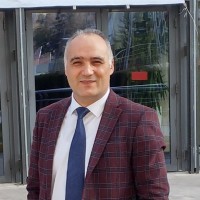

Adı Soyadı : Zeynep ŞAHİN TİMAR
Yabancı Dil : İngilizce
E-Posta : zeynep.sahin@ktu.edu.tr
Eğitim Geçmişi:
• Doktora, 2021, Anadolu Üniversitesi, Eğitim Bilimleri Enstitüsü, Bilgisayar ve Öğretim Teknolojileri Eğitimi Anabilim Dalı
• Yüksek Lisans, 2010, Karadeniz Teknik Üniversitesi, Sosyal Bilimler Enstitüsü, Bilgisayar ve Öğretim Teknolojileri Eğitimi Anabilim Dalı
• Yüksek Lisans, 2005, Başkent Üniversitesi, Sosyal Bilimler Enstitüsü, İşletme Yönetimi (MBA)
• Lisans, 2003, Karadeniz Teknik Üniversitesi, Fen-Edebiyat Fakültesi, İstatistik ve Bilgisayar Bilimleri Bölümü
Mesleki Geçmişi:
• Öğretim Görevlisi, 2016 – (devam ediyor), Karadeniz Teknik Üniversitesi, Of Teknoloji Fakültesi, Yazılım Mühendisliği Bölümü
• Öğretim Görevlisi, 2006 – 2016, Karadeniz Teknik Üniversitesi, Of Teknik Eğitim
Fakültesi, Bilgisayar Eğitimi Bölümü
Production Editor

Issue Editors
Field Editors


Language Editor


Lect. PhD NİLGÜNMÜFTÜOĞLU
Personal Information
Email: nmuftuoglu@ktu.edu.tr
Web: https://avesis.ktu.edu.tr//nmuftuoglu
Address: Karadeniz Teknik Üniversitesi Yabancı Diler Yüksekokulu
Education
Doctorate, Karadeniz Technical University, Sosyal Bilimler Enstitüsü, İngiliz Dili ve Edebiyatı , Türkiye 2009 -2018
Post-graduate, Karadeniz Technical University, Sosyal Bilimler Enstitüsü, İngiliz Dili ve Edebiyatı, Türkiye 2005 -2008
Under-graduate, Hacetepe University, Edebiyat Fakültesi, İngiliz Dili ve Edebiyatı, Türkiye 2001 -2005
Research Areas
Social Sciences and Humanities, Philology, Western Languages and Literatures, English Language and Literature
Academic Positions
Lecturer PhD, Karadeniz Technical University, Yabancı Diller Yüksekokulu, Mütercim-Tercümanlık, 2008 -Continues
Articles Published in Other Journals
I. Female Homosocial Desire in Sarah Fielding's The Governess, or Little Female Academy (1749)
MÜFTÜOĞLU N., ÇIRAKLI M.Z.
NALANS: Journal of Narrative and Language Studies, vol.7, no.12, pp.78-90, 2019 (Scopus)
Papers Presented at Peer-Reviewed Scientific Conferences
I. Learning Settings asMaternal Space in Sarah Fielding’s The Governess; or, The Little Female
Academy
Çıraklı M.Z., Müftüoğlu N.
Uluslararası Pegem Eğitim Kongresi: Toplumsal Vicdanın Geliştirilmesinde Eğitimin Rolü ,Diyarbakır,Turkey,16 -
19 September 2020,pp.73, (SummaryText)
I . THE INFLUENCE OF HOMOSOCIAL BONDS ON HAYRİ İRDAL AS CHARACTER IN AHMET HAMDİ
TANPINAR’S THE TIME REGULATION INSTITUTE
ÇIRAKLI M.Z., MÜFTÜOĞLU N.
“5.ULUSLARARASIELRUHASOSYALBİLİMLERKONGRESİ,Tunisia,3 -05October 2019
I I. Male Homosocial Desire as Represented in the Fictional World of Henry Fielding’s TomJones
ÇIRAKLI M.Z., MÜFTÜOĞLU N.
ISLET-2017 3. International Symposium on Language, Education and Teaching, ROMA, Italy, 20 April -23 May 2017,
pp.84, (SummaryText)
Non Academic Experience
MİLLİ EĞİTİM BAKANLIĞI, Öğretmen (2005-2008)
Layout Editor
Secretary
Proof Reader
Editorial Board
Prof. Dr. Yusuf Sönmez is a scientist continuing his academic career at Gazi University. He currently serves as a Professor in the Computer Engineering Department of the Technology Faculty. He also holds an administrative role as the Vice Director of the Research Center.
Education History Completing all his higher education at Gazi University, Sönmez received his undergraduate degree from the Electrical Education program in 2002. He subsequently completed his master's degree in 2005 and his Ph.D. in 2008 at the Institute of Science and Technology. He earned his doctoral degree with the thesis titled "Algorithm development for data fusion in multi-sensor systems".
Research and Areas of Expertise Prof. Dr. Sönmez's scientific studies and R&D competencies focus on the intersection of computer science and electrical-electronics engineering. His main areas of expertise include:
• Artificial Intelligence: Deep neural networks , machine learning , and pattern recognition.
• Algorithms: Metaheuristic algorithms and heuristic methods.
• Systems: Energy systems optimization , industrial automation systems , and intelligent control systems.
• Security: Information security and intrusion detection systems.
Projects and Publications He has contributed to the academic literature with many articles published in international journals (WOS, YÖK). These works include topics such as the autonomous control of UAVs , network intrusion detection , and the development of meta-heuristic search algorithms.
Additionally, he plays an active role in projects supported by TÜBİTAK and TEYDEB. He has served as a researcher and academic consultant in projects such as the development of integrated motor systems for electric vehicles , wind turbine design , and deep learning-based hydrophone data recording software.
 Web
Web
Zeki KARACA 1972 yılında Samsun' da doğdu. İlk, Orta ve Lise öğrenimini 1978-1989 yılları arasında Samsun' da tamamlayarak, 1989-1990 öğretim yılında Karadeniz Teknik Üniversitesi Mühendislik-Mimarlık Fakültesi İnşaat Mühendisliği Bölümü' ne girdi.
Lisans öğrenimi sırasında 2. sınıftan itibaren D.S.İ.' den karşılıklı, 3. sınıftan itibaren ise TÜBİTAK' tan başarıya ödül niteliğinde verilen karşılıksız burs aldı, ayrıca kendisine 1991 ve 1992 yıllarında TMMOB İnşaat Mühendisleri Odası Trabzon Şubesi tarafından da iki kez sınıf birinciliği ödülü verildi. Lisans öğrenimini, 1992-1993 öğretim yılı Haziran döneminde bölüm birincisi, fakülte ikincisi olarak bitirdi ve aynı yıl mezun olduğu bölümde Yüksek Lisans öğrenimine başladı.
Ekim 1993' de, Ondokuzmayıs Üniversitesi' nde yeni kurulan Mühendislik Fakültesi İnşaat Mühendisliği Bölümü' nün açtığı sınavı kazanarak, Ocak 1994' de bu bölümün Yapı Anabilim Dalı' na Araştırma Görevlisi olarak atandı. D.S.İ. 'den aldığı karşılıklı burstan dolayı bulunan mecburi hizmeti, bu üniversiteye devredildi.
Ocak 1996' da Prof. Dr. Ing. Ahmet DURMUŞ danışmanlığında ‘Bir Sentez Çalışması Işığında Nervürlü Donatılı Hafif ve Geleneksel Betonarme Kiriş Davranışlarının Karşılaştırmalı Olarak İncelenmesi’ konusunda hazırladığı yüksek lisans teziyle "İnşaat Yüksek Mühendisi" unvanını alarak Şubat 1996' da Doktora öğrenimine başladı.
Doktora eğitimi için, Ondokuz Mayıs Üniversitesinden aldığı görevlendirme ile Karadeniz Teknik Üniversitesinde Araştırma görevliliği yaparak, Prof. Dr. Ing. Ahmet DURMUŞ danışmanlığında ‘Betonarme Silindirik Siloların Deprem Etkisindeki Davranışlarının Analitik ve Sayısal Yöntemlerle Karşılaştırmalı Olarak İncelenmesi’ konusunda hazırladığı doktora teziyle “Doktor” unvanını aldı. Ondokuz Mayıs Üniversitesi’ne geri dönerek 2000 yılında Mühendislik Fakültesi İnşaat Mühendisliği Bölümü Yapı Ana Bilim Dalına Yardımcı Doçent olarak atanan KARACA, 2012 yılında Doçent, 2018 yılında ise Profesör unvanlarını aldı.
Lisans, lisansüstü eğitimde birçok dersin yürütücülüğünü yapıp 20 adet başarıyla tamamlanan lisansüstü teze danışmanlık yapan KARACA; Bölüm Başkan yardımcılığı, Enstitü müdür yardımcılığı, Dekan yardımcılığı ve halen de sürdürdüğü Bölüm Başkanlığı görevlerinde de bulunmuştur.
Evli olup bir çocuğu bulunan Prof. Dr. Zeki KARACA, İngilizce bilmekte ve halen, Ondokuzmayıs Üniversitesi Mühendislik Fakültesi İnşaat Mühendisliği Bölümünde öğretim üyeliği görevini sürdürmektedir..
 Web
Web
2005 yılında Karadeniz Teknik Üniversitesi Elektrik Elektronik Mühendisliği bölümünden mezun olmuştur. Yine aynı üniversitede yüksek lisans ve doktorasını tamamlayarak 2017 yılında Yrd. Doç. olarak göreve başlamıştır. Şu anda Karamanoğlu Mehmetbey Üniversitesi Elektrik Elektronik Mühendisliği bölümünde Haberleşme Anabilim Dalı başkanı olarak görev yapmaktadır.
 Web
Web
Assoc. Prof. Dr. Erdem TURKELİ actively works at Ordu University, Vocational School of Technical Sciences (Construction Department). After graduating from Middle East Technical University (METU) in 2006, he worked at the Ordu Provincial Directorate of the Ministry of Environment and Urbanization (Turkey) for about ten years. During this time period, he completed his Master's and Doctorate studies at Ondokuz Mayıs University (Samsun-Turkey) and Karadeniz Technical University (Trabzon-Turkey) in 2009 and 2016, respectively. Dr. Erdem TURKELİ investigates the seismic and wind response of high-rise and special structures such as reinforced concrete or masonry chimneys, minarets, steel lighting towers. He also has studies on the optimization of structures from many aspects. He has published many articles in internationally respected journals and is fluent in English.
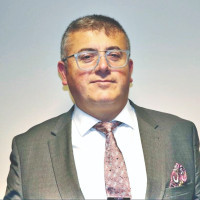
PROF. DR. ATAKAN AKSOY
Prof. Dr. Atakan AKSOY; 1974 Yılında Trabzon'da doğmuştur. KTÜ İnşaat Mühendisliği Ulaştırma Anabilim Dalı Öğretim Üyesidir. Gümüşhane Üniversitesi ve Avrasya Üniversitesi bünyelerinde de Öğretim Üyesi olarak çalışmıştır. KTÜ, Kalkınma Ajansı, TUBITAK destekli projeler yürütmüştür. DLH destekli demiryolu projelerinde çalışmıştır. Genelkurmay Başkanlığı İnşaat Emlak ve NATO Enfrastrüktür Daire Başkanlığı Deprem Araştırma Grubunda vatani görevini yapmıştır. Karayolları Genel Müdürlüğü'nün, asfaltta kireç kullanım şartnamesini oluşturma dönemlerinde, Kireç Sanayicileri derneğine bir yıl süreli danışmanlık yürütmüştür. Trabzon'da kurulmuş bulunan Doğu Karadeniz İlleri Hizmet ve Kalkınma Birliği Başkanlığı bünyesinde Turizm ve Çevre Altyapısı Bileşen Koordinatörlüğü görevlerinde bulunmuştur. Bölgesel Kalkınma konusundaki çalışmaları nedeniyle Devlet Planlama Teşkilatı Müsteşarlığı tarafından teşekkür belgesi ile taltif edilmiştir. Türkiye Lojistik Master planı çalışmalarına katkılar sunmuştur. Birçok ulusal ve uluslararası yayın çalışması yürütmüştür. Çimento ve kireç stabilizasyonları, yeni malzeme teknolojileri, yenilikçi kaplama teknikleri, cam ve nanokil asfalt kaplamalar, prefabrik eleman üretim konuları, geri dönüşüm uygulamaları, trafik mühendisliği ve ulaştırma planları, raylı sistemler etütleri ve demiryolu Fizibilite etüt projeleri konularında çalışmalarda bulunmuştur.
Prof. Dr. Atakan AKSOY aaksoy@ktu.edu.tr 05056550143